English
  中文
中文

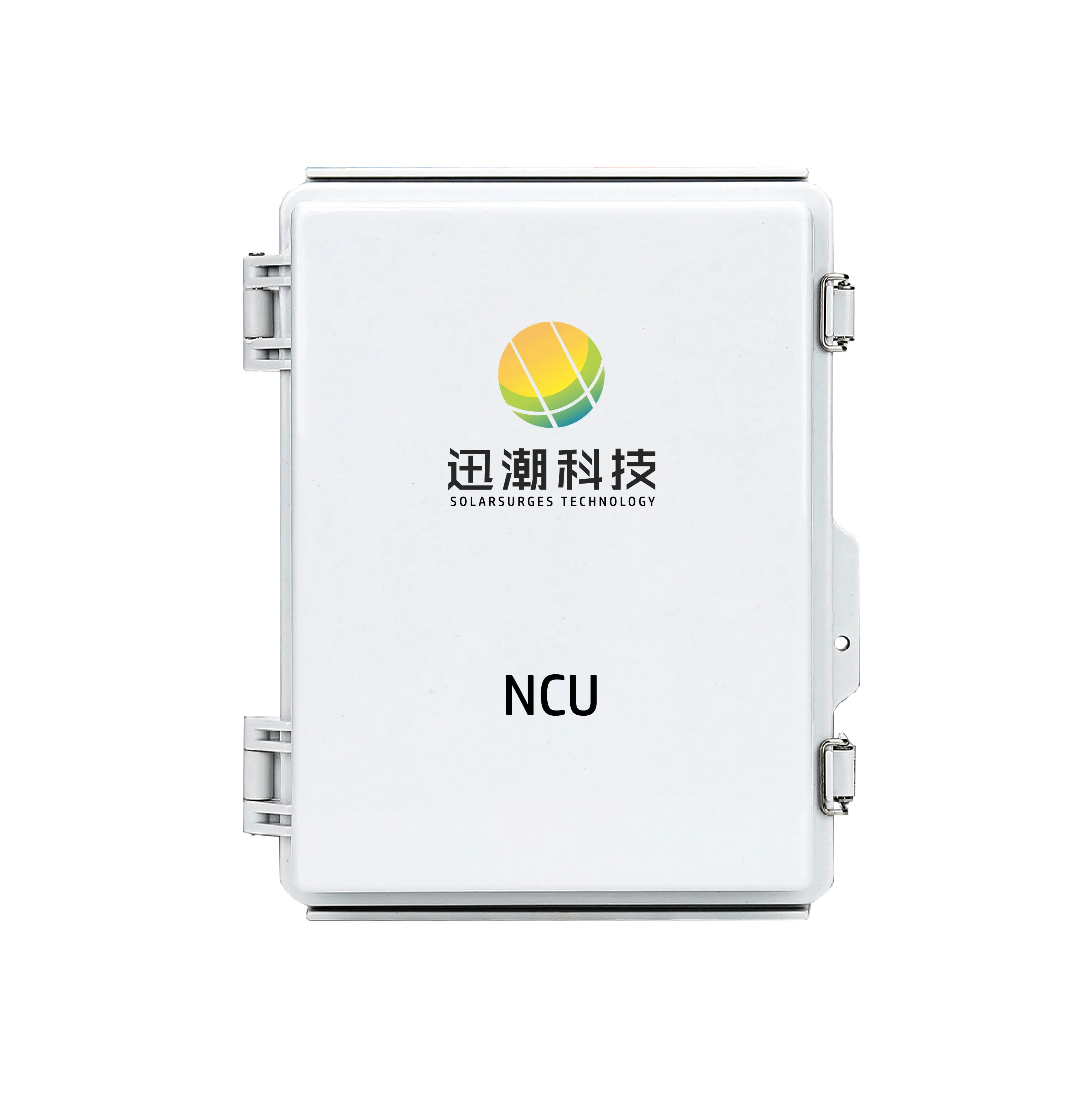
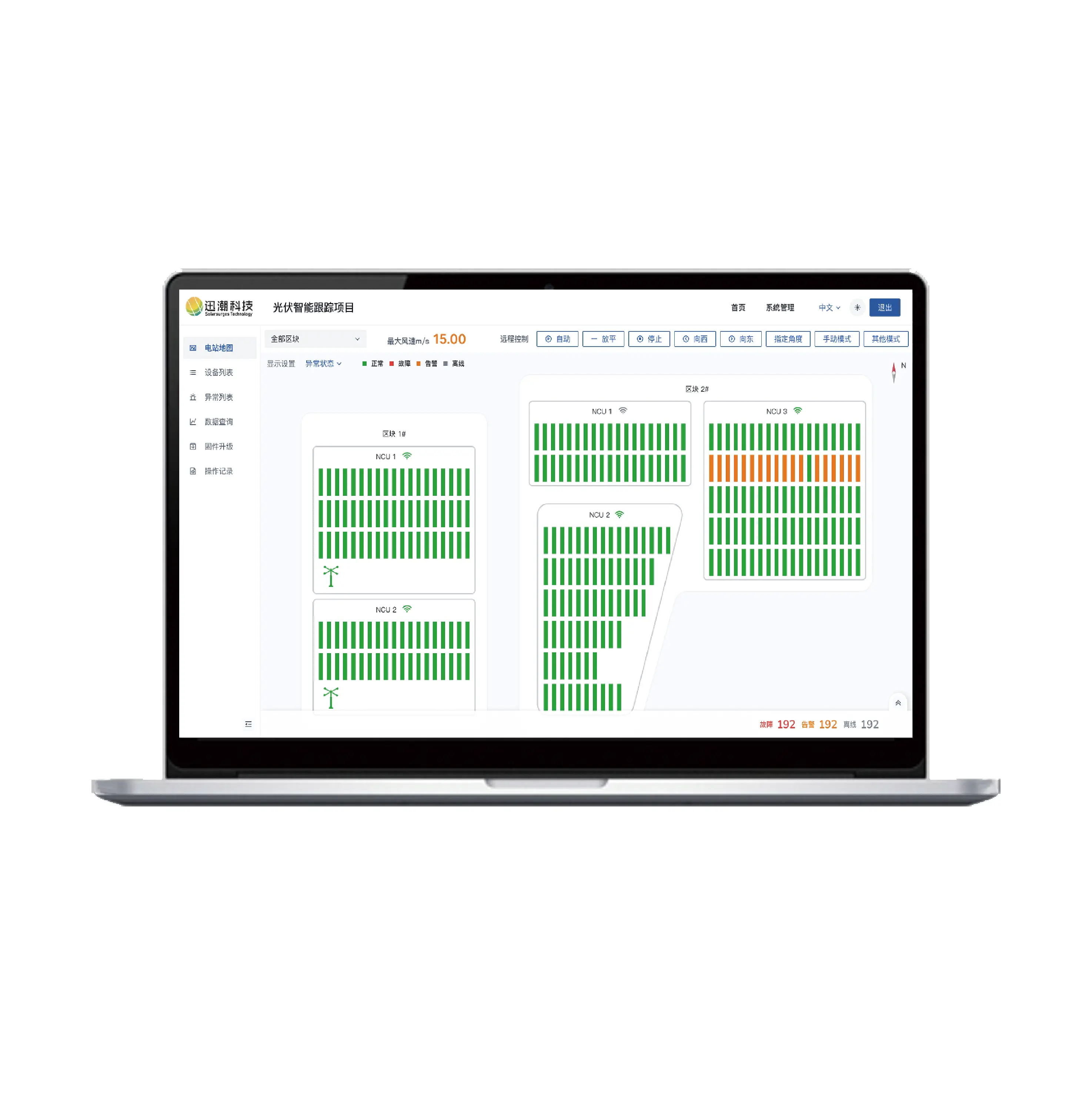

Table of Content
[Hide]
Wind-Solar Hybrid Storage Systems: A Viable Energy Solution for Manufacturing
Discover how wind-solar hybrid storage systems powered by solar tracker controllers, SCADA platforms, and BESS are transforming India's manufacturing sector in 2026.
Introduction
As technology advances and energy demand continues to surge, India is deploying renewable energy at an unprecedented pace—and at the heart of this transformation lies battery technology, with wind-solar hybrid storage systems emerging as the most economically and sustainably viable energy solution for the nation's manufacturing sector.In 2026, India's non-fossil power capacity has reached 283.46 GW, renewable installations alone hit 274.68 GW, and the country added a record 44.6 GW of solar and 6 GW of wind capacity in a single fiscal year. Yet rapid expansion brings pressing grid integration challenges: over 35 GW of renewable capacity faces curtailment risk, with some projects experiencing a 39% curtailment rate during peak demand months.
For manufacturers, this presents a clear opportunity. A solar SCADA-enabled solar tracker controller ecosystem—paired with battery energy storage—delivers the full-time, dispatchable clean power that energy-intensive factories desperately need. This article examines why wind-solar hybrid storage is no longer optional but essential for India's manufacturing industry, and how solar TCU, solar NCU, and solar SCADA technologies form the intelligent backbone of these systems.
Why India's Manufacturers Need Wind-Solar Hybrid Storage Now
Skyrocketing Renewable Capacity—And Grid Curtailment
India has become the world's third-largest renewable energy market. But with great scale comes great challenge: between May and December 2025, India curtailed 2.3 TWh of solar generation—equivalent to the annual electricity consumption of nearly 400,000 households. Crisil Ratings warns that over 35 GW of renewable capacity risks curtailment, with 80% of those losses concentrated in projects holding only temporary grid connection permits.The grid simply cannot absorb all the intermittent generation from solar and wind without storage. This is the core problem that solar NCU (Network Control Unit) and solar TCU (Tracker Control Unit) technologies are purpose-built to solve.
Government Priorities Shift to Manufacturing Decarbonization
India's FY2027 budget signals a strategic pivot: energy transition policy has moved from pure renewable deployment to supporting domestic manufacturing and industrial decarbonization, with clean energy spending up 40% to $5 billion. Speaking at India Energy Week 2026, MNRE Secretary Santosh Kumar Sarangi confirmed that future policy will focus on grid integration, distributed energy management, and strengthening domestic manufacturing across the solar and wind value chains.For manufacturers, this policy tailwind creates both obligation and opportunity—to decarbonize operations using solar tracker controllers and intelligent energy management systems while gaining competitive advantage.
System Advantages of Wind-Solar Hybrid Storage
Wind-solar hybrid storage integrates photovoltaic generation, wind power, and battery energy storage, coordinated by an intelligent control system. Its core advantages for manufacturing are substantial:Higher Power Reliability
As renewable penetration deepens, grid stability becomes increasingly volatile. A wind-solar hybrid system smooths the output fluctuations of both generation sources. When solar output dips (cloud cover, nightfall), wind generation compensates; when wind calms, stored battery power discharges. The solar TCU manages individual tracker motors to optimize panel angles throughout the day, while the solar NCU aggregates data from multiple TCUs to coordinate string-level and plant-level dispatch. This three-layer intelligence—tracker, string, and grid coordination—delivers reliably steady power to the factory floor.Higher Self-Consumption Rates
Manufacturing facilities typically peak in electricity demand during daytime hours. On-site solar generation feeds this load directly; surplus power charges the BESS for nighttime or adverse weather use. Integrating wind generation further maximizes renewable utilization across all hours, reducing dependence on expensive grid power during peak tariff periods.Lower Electricity Costs
With industrial electricity tariffs rising across India, manufacturers deploying wind-solar hybrid storage can significantly cut energy expenses through self-consumption. BESS further enables peak-shaving and valley-filling strategies—charging during low-demand/off-peak hours and discharging when grid prices peak. A solar SCADA platform provides the real-time visibility and historical analytics needed to optimize these charge/discharge cycles and maximize savings.Reduced Curtailment Losses
In high-curtailment states like Rajasthan and Gujarat, equipping wind-solar installations with BESS captures previously wasted generation. The solar SCADA system monitors curtailment events in real time, triggering BESS charging when generation exceeds grid absorption capacity. This directly improves project ROI and accelerates payback timelines.The Central Electricity Authority's National Electricity Plan (2026-27 to 2035-36) projects India needs 80 GW of battery storage plus 94 GW of pumped hydro by 2035-36 specifically to manage renewable intermittency. Wind-solar hybrid storage is central to this roadmap—and solar NCU platforms are the system integrators that make it work.
Application Scenarios: From Industrial Parks to Factory Floors
Large Industrial Parks and SEZs
Industrial parks typically have expansive rooftop and land resources suitable for distributed solar PV, often combined with on-site wind turbines. A BESS integrated with solar TCU-controlled trackers and a solar SCADA platform enables intelligent load scheduling—peak shaving, demand response, and islanded operation during grid outages.Energy-Intensive Manufacturing
Steel, cement, chemicals, and textile industries have large, continuous power demands. Wind-solar hybrid storage ensures uninterrupted green electricity supply, reduces carbon intensity, and supports compliance with tightening environmental regulations. The Indian government's $2.2 billion industrial decarbonization fund explicitly targets the power, steel, cement, refining, and chemicals sectors—solar tracker controllers and solar SCADA monitoring are key enabling technologies for CCUS-ready facilities.Automotive Manufacturing and EV Charging
As India's automotive sector accelerates electrification, on-site renewable generation paired with BESS can power EV charging infrastructure with clean energy while buffering grid impact from rapid charging loads. The solar NCU coordinates between on-site generation, storage, and EV charger dispatch to maximize solar self-consumption. As of March 2026, India's solar capacity has surpassed 150.26 GW—over 50x the 2014 figure—providing a robust generation backbone for automotive manufacturing electrification.Real Project Case Studies: Proof of Viability
CleanMax 185 MW Wind-Solar Hybrid Project (Kalavad, Gujarat)
In April 2026, CleanMax commissioned a 185 MW wind-solar hybrid project in Kalavad, Gujarat, serving 17 manufacturing clients—including Apar Industries and Borosil Renewables—under a captive/group captive model. The project delivers around-the-clock green power, avoiding approximately 36,100 tonnes of CO₂ emissions annually and generating over ₹165 crore in stable annual revenue for investors. The hybrid plant relies on solar TCU networks for tracker-level optimization and solar SCADA for unified plant monitoring and reporting.Nueron Energy 5 GWh BESS Manufacturing Facility (Talegaon, Maharashtra)
On the storage manufacturing side, Nueron Energy launched a fully automated 5 GWh BESS gigafactory in Talegaon, Maharashtra in April 2026, producing containerized storage systems for solar developers, C&I (commercial & industrial) customers, and utilities. This expands India's domestic BESS supply chain for hybrid projects nationwide.Luminous Power Technologies Integrated Solar + Storage Manufacturing (Angul, Odisha)
On April 13, 2026, Luminous Power Technologies announced an integrated solar cell and storage manufacturing complex in Odisha. The solar facility will produce silicon ingots, wafers, and solar cells, while an adjacent Angul storage factory will produce BESS systems—significantly strengthening India's vertical integration in the solar TCU and solar NCU supply chain.Zelestra India 1 GW C&I Clean Energy Target
Zelestra India has deployed solar-wind-BESS hybrid solutions for automotive and textile manufacturing clients, targeting 1 GW of C&I clean energy capacity by 2026. The Zelestra deployments showcase how solar SCADA platforms aggregate multiple generation sources and storage assets into a single operational dashboard.Policy and Market Drivers
Fiscal Incentives
India has approved two Viability Gap Funding (VGF) tranches for large BESS projects: ₹376 crore for 13,220 MWh in March 2024, and ₹540 crore for 30 GWh in June 2025 (₹18 lakh per MWh). Additionally, import duties on critical materials like lithium-ion cells and solar glass have been abolished, substantially reducing storage system costs.Market Mechanisms
Regulators are shifting procurement from pure renewable auctions to storage-inclusive formats—wind-solar-storage hybrids, peak-hour supply, and dispatchable renewable energy. The Central Electricity Regulatory Commission (CERC) is progressively reducing the "X-factor" in the renewable deviation settlement mechanism, incentivizing project developers to install solar NCU-based forecasting and storage to improve generation accuracy and dispatchability.Local Manufacturing Mandates
From June 2026, India will mandate domestically manufactured solar cells in all solar projects. This creates a structural advantage for Indian manufacturers of solar TCU controllers, trackers, and solar SCADA platforms, ensuring supply chain resilience for domestic hybrid storage projects.
Conclusion
As renewable intermittency challenges intensify and India's manufacturing sector faces mounting pressure to decarbonize, wind-solar hybrid storage systems are making the leap from "optional add-on" to "operational necessity."The intelligent control layer—solar TCU, solar NCU, and solar SCADA—is what makes these systems truly dispatchable for manufacturers. A solar tracker controller maximizes panel-level energy harvest, the solar NCU coordinates strings and storage in real time, and solar SCADA delivers the plant-wide visibility and asset management that factory operators need.
From the 185 MW Kalavad hybrid project powering 17 manufacturers in Gujarat, to the 5 GWh BESS gigafactory in Maharashtra, India's market is proving that wind-solar hybrid storage is not just technically viable—it's commercially compelling.
For manufacturing enterprises, early adoption means lower energy costs, stronger ESG credentials, and a decisive competitive edge in a global trade environment where green supply chains are increasingly non-negotiable.
Ready to explore how wind-solar hybrid storage with solar TCU, NCU, and SCADA can power your facility? Connect with an experienced renewable integrator to assess your site's potential.
References
Related Solar Tracker Products