English
  中文
中文

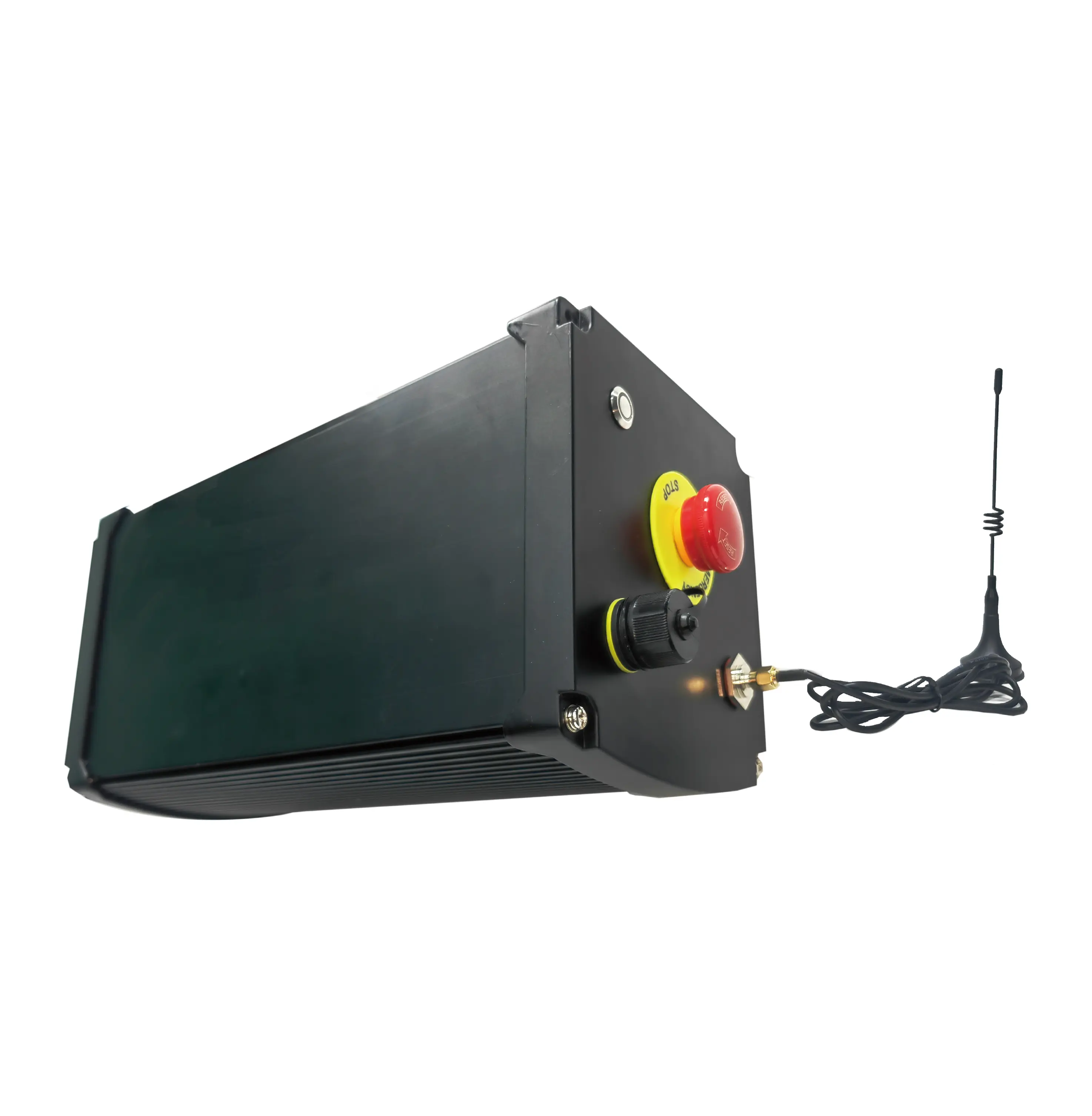

Table of Content
[Hide]
Polysilicon Price Slump & Solar Industry Outlook
Polysilicon Prices Collapse 10% in One Week: The Solar Industry's Long Road to Recovery
Published: April 7, 2026 | Source: Compiled by Solar Research Desk | Data: China Nonferrous Metals Industry Association, CITIC Futures, Guotai Junan FuturesA record-breaking price crash is sending shockwaves through the global solar PV supply chain. In the week of April 1, 2026, n-type polysilicon prices plummeted 9.88% to a startling average of ¥36,500/MT—dipping as low as ¥25,000/MT at market lows. The critical ¥40,000/ton cost floor, widely considered the cash cost threshold for leading polysilicon producers, has now been breached across the board. Every player in the market is operating at a loss.This isn't just a pricing correction—it's a structural reckoning. And for companies supplying or buying solar tracker controller systems, solar TCU hardware, solar NCU modules, and solar SCADA monitoring platforms, the ripples are only beginning to be felt.
What's Driving the Collapse: Two Forces Converging
1. Export Tax Rebate Abolition Cuts Deep
On April 1, 2026, China abolished the 9% VAT export tax rebate for solar PV products. The immediate consequence: overseas demand weakened sharply as manufacturers lost the price competitive advantage that the rebate had provided.Analyst Li Xiangying of Guotai Junan Futures noted that post-rebate, solar module producers have been steadily reducing operating rates. The effect is propagating upstream. CITIC Futures analyst Liu Jiaqi estimates that production scheduling across the silicon wafer, cell, and module segments has fallen below 50 GW each—significantly below balanced-market levels. Downstream utilization rates have tanked.
Take the 210R solar module as an example. Without the 9% export rebate, each module needs to increase in price by approximately ¥50 just to maintain current margin. But with U.S. market tariffs already erected and the European market approaching saturation, new markets are price-sensitive and hesitant. Most module makers have adopted a wait-and-see posture—cutting polysilicon demand further.
2. Anti-"Internal Competition" Campaign Halted
A second, less visible but equally powerful force compounded the damage. The solar industry's self-imposed "anti-internal-competition" self-discipline campaign—launched in July 2025 to coordinate production cuts and stabilize prices—was officially halted in January 2026 after regulatory intervention by China's State Administration for Market Regulation (SAMR). Regulators explicitly prohibited enterprises from coordinating on capacity utilization rates or pricing.The result: the industry's path to rebalancing shifted from "organized self-restraint" to "chaotic market warfare." No actor can legally constrain supply. Competing purely on cash burn, producers are locked in a grueling war of attrition.
Key Takeaway: With both demand-side stimulus (export rebate) removed and supply-side coordination (anti-internal-competition) banned by regulation, the polysilicon market faces a rare "demand-collapse + supply-anarchy" double shock.
What the Numbers Tell Us: A Market in Freefall
The Guangzhou Futures Exchange (Guangfu Exchange) polysilicon futures hit ¥33,235/MT intraday on April 3, the lowest since July 2025. Global polysilicon inventory is estimated at approximately 518,700 MT in April—roughly five months of demand at current consumption rates.
Small-to-mid-tier manufacturers, under severe cash pressure, have already begun pricing negotiations as low as ¥35,000–36,000/MT. Buyers, however, are still probing for ¥32,000–33,000/MT—further downside is clearly being priced in.
Some previously signed contracts have been torn up and re-signed at lower prices. Buyers have largely balked at any polysilicon pricing above ¥40,000/MT.
What This Means for Solar Tracker Controller, TCU, and NCU Supply Chains
The downstream solar ecosystem—particularly companies manufacturing or deploying solar tracker controller systems, solar TCU (Tracker Control Unit), and solar NCU (Node Control Unit)—faces a complex and paradoxical situation.On the cost side, cheaper polysilicon should theoretically ease pressure on solar tracker controller and TCU/NCU manufacturing, since these components rely on silicon-based semiconductors and precision-machined parts whose input costs are tied to the broader metals and materials complex.
On the demand side, the picture is bleaker. Chinese module makers are running skeleton crews, with some producers diverting silicon inventory to downstream toll-processing arrangements just to keep cash flowing. Global solar project pipelines—especially in Europe and emerging markets—are showing signs of delays as module buyers adopt a holding pattern, betting on further price declines.
This creates a dangerous dynamic for solar tracker controller suppliers: even as their input costs soften, their customers (module makers and EPC firms) are either deferring orders or demanding aggressive price concessions to compensate for their own polysilicon inventory losses.
The solar SCADA market faces similar crosscurrents. While operators of existing solar farms benefit from lower equipment costs during expansion phases, new project starts are stalling, potentially slowing SCADA deployment pipelines in 2026.
Pro Tip: For buyers of solar TCU and NCU components, now may be an opportune window to negotiate favorable terms—but only with suppliers whose financial positions are strong enough to survive the prolonged downturn.
The Deep-Water Zone: Competition Is No Longer About Technology
Here's the uncomfortable truth about the current phase of the polysilicon downturn: when prices fall below the marginal cash cost of the least-efficient producers, the basis of competition fundamentally changes. It is no longer a contest of technology leadership, manufacturing efficiency, or scale economics. It becomes a test of cash flow endurance and survival will.Differentiated behaviors are already emerging:
- Industry leaders are holding prices, refusing to quote, and redirecting their silicon inventory into downstream toll-processing arrangements to reduce cash burn.
- Cash-strapped smaller producers are capitulating, accepting low prices just to maintain cash circulation and keep workers employed.
- Buyers are still probing, testing the floor and expecting further declines toward ¥32,000–33,000/MT.
Frequently Asked Questions
How long will the polysilicon price slump last?
Most analysts do not expect a meaningful price recovery before Q3 2026 at the earliest. CITIC Futures analyst Liu Jiaqi estimates that downstream hidden inventory may not normalize to a safe ~1-month level until around May 2026, at which point restocking demand could provide a floor. Until then, prices are likely to remain under pressure.Will lower polysilicon prices reduce solar tracker controller costs?
Partially. While polysilicon is not a direct input for solar tracker controller electronics, the broader solar supply chain weakness creates a deflationary environment. Suppliers of TCU, NCU, and SCADA systems are under margin pressure from their customers, which may translate to more competitive pricing—but also risks quality erosion from financially squeezed manufacturers.What does the anti-internal-competition halt mean for the solar industry?
It means the solar industry lost its voluntary supply-management mechanism. Instead of coordinated production cuts negotiated between major players, the market must now rely on brutal unilateral decisions—plant closures, workforce reductions, and financial losses—to achieve rebalancing. This process is typically longer and more painful than organized restraint.Is there any good news for the solar sector amid this crisis?
Yes. The silver lining is structural: this downturn will accelerate the exit of high-cost, inefficient polysilicon capacity. Producers with best-in-class costs and superior technology will emerge stronger. For downstream solar tracker controller makers and SCADA operators, the long-term outlook improves as weaker competitors are eliminated and the industry's competitive foundation becomes healthier.Conclusion:黎明前,仍需耐心
The polysilicon price collapse of April 2026—triggered by the convergence of export tax rebate cancellation and the regulatory termination of supply-side coordination—is the most severe stress test the solar PV industry has faced in years. It is not over.Key watchpoints for the months ahead:
- May–June: Southern China wet season lowers power costs → production cost floor drops further
- Q2 2026: Inventory normalization is the critical inflection point to watch
- Second half 2026: Terminal demand recovery and market confidence rebuilding are the true recovery signals
References
Related Solar Tracker Products