English
  中文
中文


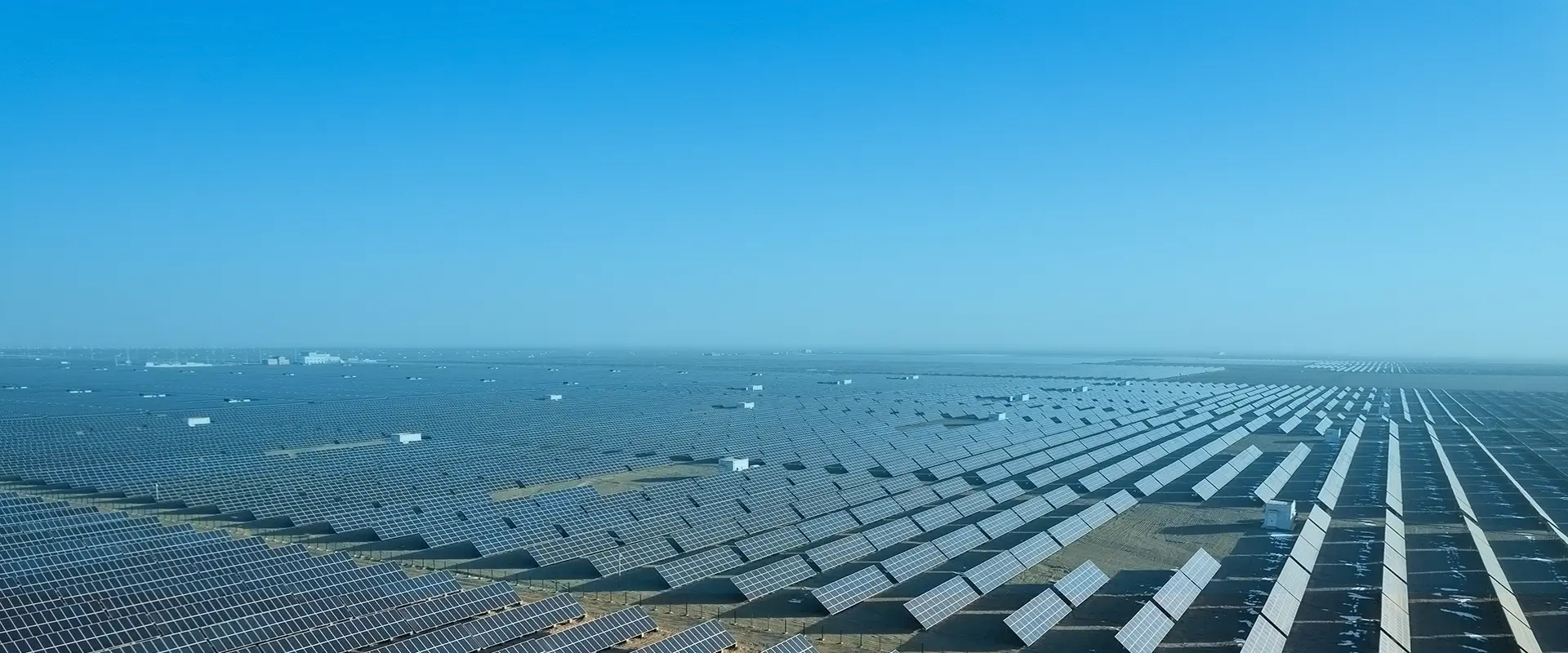
On June 9, 2026, the U.S. International Trade Commission (ITC) finalized its affirmative injury determination, clearing the way for U.S. Customs and Border Protection (CBP) to begin collecting new anti-dumping and countervailing (AD/CVD) duties on crystalline silicon photovoltaic (PV) cells and modules imported from Cambodia, Malaysia, Thailand, and Vietnam. The ITC's June 2 affirmative final injury ruling — which concluded that imports from the four Southeast Asian nations caused "material injury" to U.S. domestic manufacturers — marked the last legal hurdle before full enforcement. Following the Biden administration's revocation of duty exemptions in August 2025 and the Commerce Department's final duty rates published on April 21, 2026, this AD/CVD investigation has now reached its conclusion: the primary pathway used by Chinese solar manufacturers to access the U.S. market via Southeast Asia has been permanently closed.
Final rates diverged significantly from preliminary figures, with several companies seeing their applicable duties raised by hundreds of percentage points. Anti-dumping rates reached as high as 271.28%; countervailing duty rates peaked at 3,403.96%. A Cambodian producer faced the highest countervailing duty at 3,403.96%; a Vietnamese producer faced an anti-dumping rate of 271.28%; and a Malaysian producer was hit with countervailing duties near 250%. JinkoSolar's Malaysian products were assessed at 21.31% and its Vietnamese products at 56.51%. Trina Solar faced 77.85% for Thai products and 54.46% for Vietnamese products. Hanwha Qcells Malaysia received a 0% anti-dumping rate.
Throughout the year since the U.S. initiated its investigation through preliminary and final determinations, the industry quietly began relocating capacity. Multiple industry insiders told media that as early as last June — when U.S. tariff exemptions expired — "customers gradually paused and planned to move out, with production and new orders already at a standstill." With final AD/CVD rates now compounded by additional levies such as the Baseline Reciprocal Tariff, solar products exported to the U.S. from these four countries are commercially non-viable.
Goldman Sachs, in a newly published analysis, estimates that under the "ASEAN-sourced cells + U.S.-based module assembly" model, production costs for Chinese manufacturers will rise by an average of 50%. Assuming 50% of the tariff cost is passed on to consumers, U.S. market prices face an upward pressure of approximately 15%. Average per-unit profit margins are expected to decline by 40%, with gross margins compressed by 17 percentage points to 22%.
A senior executive at a Southeast Asian manufacturing facility noted that some mid-sized and smaller enterprises — particularly those that came online in recent years and have not yet recouped their initial investments — are scrambling to relocate production lines to Indonesia and Laos, which have not been named in the AD/CVD investigations, hoping to capture export opportunities before any further U.S. policy tightening.
Zhuang Yinghong, Director of Strategy and Market Management at Boda New Energy, observed that many companies had long anticipated "ongoing supply chain resilience risk": during initial capacity planning, they conducted risk assessments and proactively moved module production equipment to neighboring countries like Indonesia and Laos. However, "how long Indonesia can hold out is anyone's guess," he said. Under the multi-layered constraints imposed by U.S. trade policy, the Southeast Asia-based export strategy that served Chinese solar companies for years is now facing total Invalid (complete Invalid).
The U.S. cannot achieve self-sufficiency in solar manufacturing in the short term. With duties firmly in place, the high tariff burden will drive up total construction costs and development economics for solar projects in the United States. Utility-scale solar deployment may be severely disrupted by poor economic returns and tariff uncertainty. According to Wood Mackenzie, while U.S. utility-scale solar project pipelines stand at 216 GW to 240 GW, the critical question is how these projects can maintain an acceptable return on investment under the shadow of tariffs — an issue that demands careful analysis over the coming years.
Some Chinese companies are also exploring the possibility of establishing manufacturing facilities inside the United States. However, according to Wang Cheng, Chief Operating Officer at TCL Technology, "the feasibility of building factories in the U.S. depends heavily on the specific industry." He noted that in some industries — such as consumer electronics — "building assembly factories in the U.S. may simply not make economic sense." He added that certain industries may find current conditions make U.S. investment appear necessary, but "circumstances are always subject to change."
Since March 27, 2026, China's Ministry of Commerce initiated a trade barrier investigation into U.S. practices and measures that obstruct green product trade, with the investigation scheduled to conclude by December 27, 2026. Industry analysts suggest that in an environment where the WTO Appellate Body remains paralyzed and U.S. trade remedy tools are being repeatedly abused, Chinese PV companies must build comprehensive competitiveness across product development, market diversification, global supply chain configuration, and compliance management to navigate escalating global trade barriers. Maintaining high-quality product and service output during the global green energy transition remains the fundamental pathway to sustainable growth for China's solar industry worldwide.
Disclaimer: All data in this article is current as of June 15, 2026, and is sourced from the U.S. Department of Commerce Final Determination, ITC Ruling Documents, Goldman Sachs Research Reports, Reuters, Economic Daily News, and publicly available media reports. This article is for reference only and does not constitute investment advice.
Related Solar Tracker Products