English
  中文
中文


Between June 23 and 25, 2026, the 34th edition of Intersolar Europe filled 19 halls and more than 200,000 m² of the Munich Neue Messe, drawing 2,700+ exhibitors from 50+ countries and over 100,000 professional visitors. Among them, roughly 850 Chinese companies showed up in force — making China, for the third year running, the second-largest exhibitor bloc behind host nation Germany. From the most prominent slots on the hall map to an 800-deep list of Chinese names in the catalog, Europe's largest solar trade fair is being quietly, thoroughly reshaped by Chinese faces.
Ten years ago at Intersolar, the questions at every booth were the same: What's your efficiency? What's your output? What's your degradation rate? Walk the floor this year, and the questions have changed. Visitors now ask: What's your production capacity? What's your lead time? Where's your overseas warehouse? How big is your local service team? Can the storage system be shipped as one integrated package?
The industry has matured. The gap between competing technology roadmaps has narrowed. Once module efficiencies converge to within half a percentage point and storage specs start to look interchangeable, the question that actually decides whether a project gets built is no longer "is your product better?" — it's "can you deliver, install, and commission it in Europe?"
What Chinese firms brought to Munich this year has been well documented in the trade press: LONGi Hi-MO 9 Prime, Aiko INFINITE ULTRA, GCL GPC3.0, Trina's third-generation Vertex N series, Huawei's LUTERRA storage platform, Envision's 4.X MWh long-duration storage system. Every booth carried its latest mass-production hardware. What did Western vendors bring? SMA showed grid-forming inverters and grid-support products. SolarEdge and Enphase doubled down on home storage, microinverters, and residential energy management.
Behind that contrast sit two very different industrial logics. Chinese firms increasingly sell system capability — exporting not just the product, but the entire delivery chain, "from factory to power plant." Western vendors still lean on a stronger tradition of specialized division of labor, emphasizing innovation at key points in the value chain. Neither side is wrong. They're at different stages of the same race. When module efficiencies compress to within 0.5% and storage parameters converge, customers stop asking which product is better and start asking which team can land the project on schedule.
What Chinese exhibitors showed was not a single panel or a single inverter. It was a complete delivery package — module, inverter, storage, mounting, solar tracker controller, and increasingly the solar SCADA layer above it. European customers who visited Chinese production bases for the first time reported the same reaction: it wasn't a factory they were walking through, it was an entire industrial city — material suppliers next door, equipment suppliers next door, testing institutes next door. The West optimizes the company. China optimizes the industrial network. That gap cannot be closed with money alone.
The names you couldn't miss on the hall map: CATL, Huawei, BYD, Sungrow. Other major Chinese launches came from Chint Power, SPIC New Energy, Trina Solar, Tongwei, GCL Tech, JinkoSolar, Hithium, LONGi Green Energy, REPT Battero, and Deye — with a dense pipeline of new high-efficiency modules, next-generation inverters, integrated storage systems, and smart solar-plus-storage solutions covering residential, commercial, and utility-scale use cases.
- GCL Tech globally premiered the GPC3.0 module, the latest iteration of its BC technology line, with mass-production efficiency breaking 27.5% and peak cell efficiency hitting 27.8%, with yield holding steady above 96%.
- Tongwei unveiled the TNC 3.0 concentrating module globally, with bifaciality reaching up to 93.07%.
- Trina Solar showed its third-generation Vertex N series on the i-TOPCon Ultra platform, with peak output up to 760 W.
- Znshine Solar rolled out its HJT flagship module at up to 740 W.
- TCL Solar launched a new BC module generation, backed by 1,600+ BC patents spanning the full global value chain.
- Aiko ran ads on the Intersolar homepage promoting its ABC Gen 4 module.
- Huawei released its 2026 Smart PV strategy and a new generation of grid-forming storage platform, LUTERRA™.
- Envision delivered its first full European showcase of integrated solutions for the new power system, including an AI power system, a 4.X MWh long-duration storage system with 8 to 16 hours of duration, and a wind-solar-storage hybrid configuration built around its PV inverters.
- Trina Storage showed the Elementa + Electra AC/DC integrated storage solution. The new Elementa 3 large-scale storage system packs a 587 Ah high-density cell, pushing a single 20-foot container to 6.25 MWh.
- REPT Battero placed its Powtrix 5.0 storage system at the center of its booth: a single-cabin 6.9 MWh capacity built around a self-designed 648 Ah large-format cell.
- Hithium officially launched its premium residential storage brand ARKVOLT.
- Sungrow rolled out the SG125CX-P3 high-power C&I string inverter with up to 98.5% maximum efficiency.
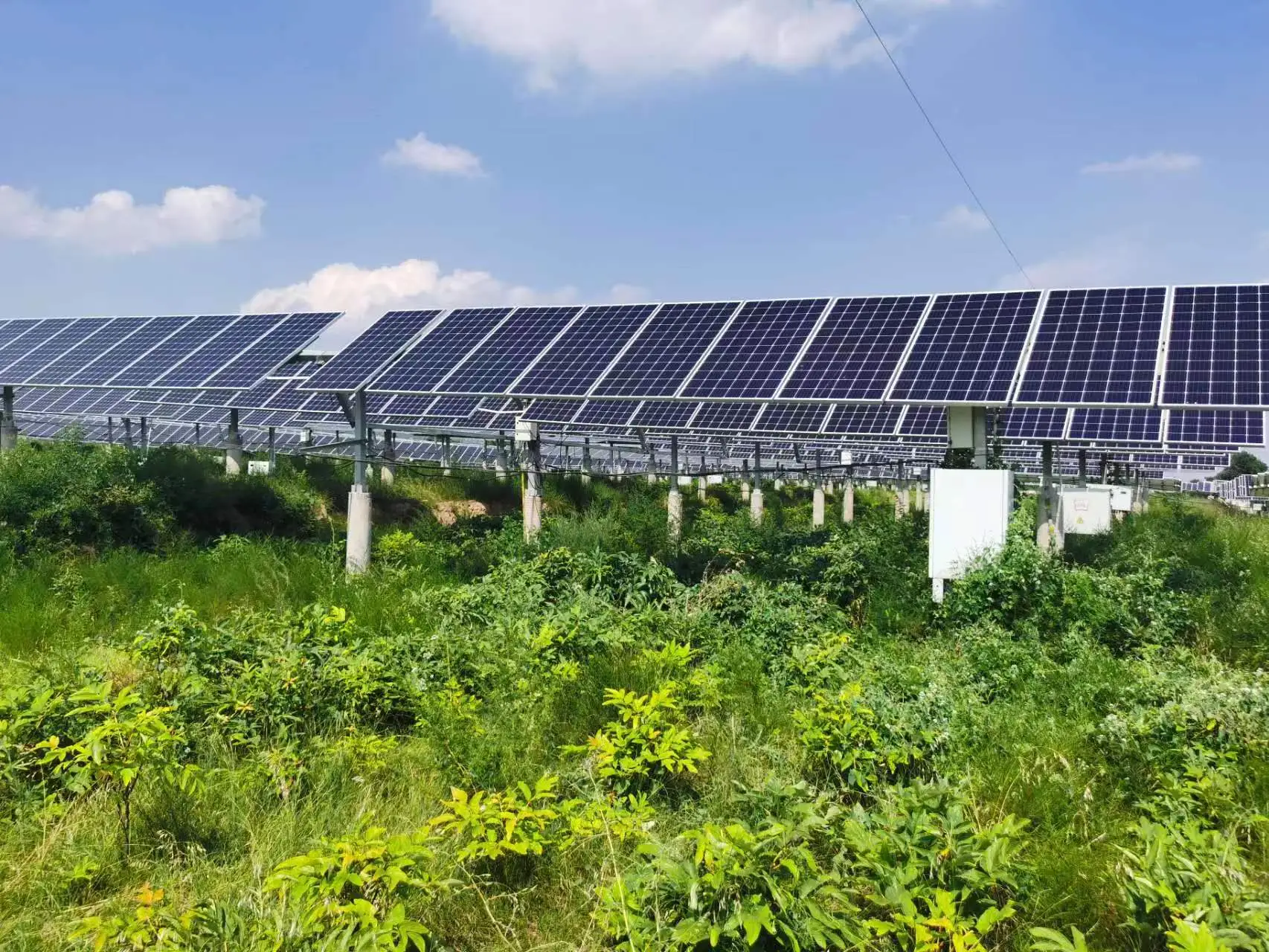
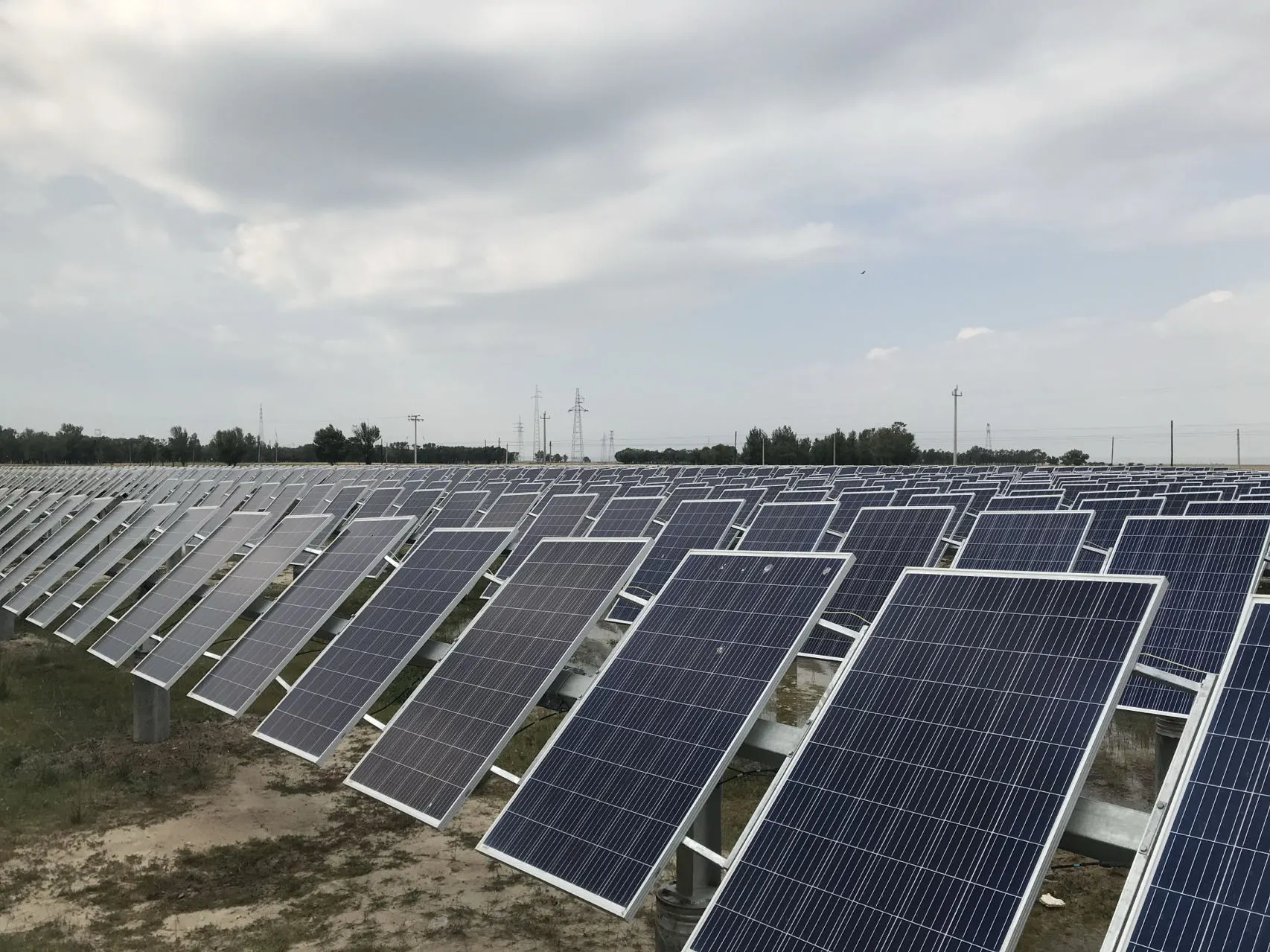
- Trina Solar upgraded its Pioneer 1P smart tracking solution with a patented spherical bearing designed to handle complex terrain.
This isn't a single breakthrough. It's a system-level advantage on full display.
Chinese companies pushed hard on utility-scale storage: Huawei's LUTERRA grid-forming platform, Envision's 4.X MWh long-duration system with its 8-to-16-hour duration and grid-forming support. These products are aimed at large ground-mount stations, grid-level projects, and high-penetration renewable scenarios. Chinese firms are good at turning storage into infrastructure.
Western vendors leaned into residential storage and home energy management: SolarEdge's and Enphase's low-power, smart products serve Europe's mature distributed rooftop and home energy scene. Western firms are good at turning storage into a consumer product and energy-management entry point.
The former is built on cell manufacturing, system integration, and project delivery — fundamentally a scaled industrial capability. The latter is built on high electricity prices, mass residential PV adoption, and mature home energy management — fundamentally a terminal-scene innovation. The first competes on scale efficiency. The second competes on scene depth.
Both paths have merit. But in Europe's market today, scaled industrial capability is becoming the more dominant force.
In 2025, listed Chinese PV companies on the main industrial chain posted combined net losses exceeding RMB 60 billion. In the first half of the year, module prices collapsed off a cliff; the storage sector was under the same pressure. The whole industry was trapped in a "produce more, earn less" cycle. This wasn't cyclical — it was structural: homogeneous overcapacity, race-to-the-bottom bidding, the entire value chain squeezed into a thin-margin band.
Compare that to overseas profitability. Take CATL: its overseas gross margin hit 31.44% — 7.44 percentage points higher than at home. The same production line, the same workers, the same technology — products shipped to Europe nearly double the profit. The root cause of domestic losses isn't weak demand. It's lost pricing power.
The Chinese faces on the Munich show floor are betting on Europe's next decade. Despite trade barriers and tariff pressure, Europe remains one of the highest-value PV markets in the world: high electricity prices, a mature distributed market, and a clear energy-transition mandate. Together, those factors form the core gravitational pull for Chinese exporters.
SolarPower Europe data shows the EU added 65.1 GW of new PV in 2025 — a 0.7% dip from 2024's 65.6 GW. It was the EU PV market's first annual decline since 2016. At the same time, the EU's cumulative PV installed base reached roughly 406 GW, hitting the 400 GW target set by the 2022 EU Solar Energy Strategy.
The build-out is done. The question has shifted from "can we generate it?" to "can we use it?" Europe is entering the system absorption era — the era where the winners will be the companies that can turn variable PV generation into stable, dispatchable power and solve the absorption and grid-stability puzzle.
As Europe's drive for energy autonomy intensifies, integrated "PV + storage + smart control" solutions are becoming the industry mainstream. Chinese firms have rolled out scene-specific, customized solar-plus-storage products to tackle local pain points — grid connection constraints, volatile electricity prices, land-use limits. Industry competition has now escalated into a full-dimensional ecosystem battle spanning AI intelligence + hardware + localized service.
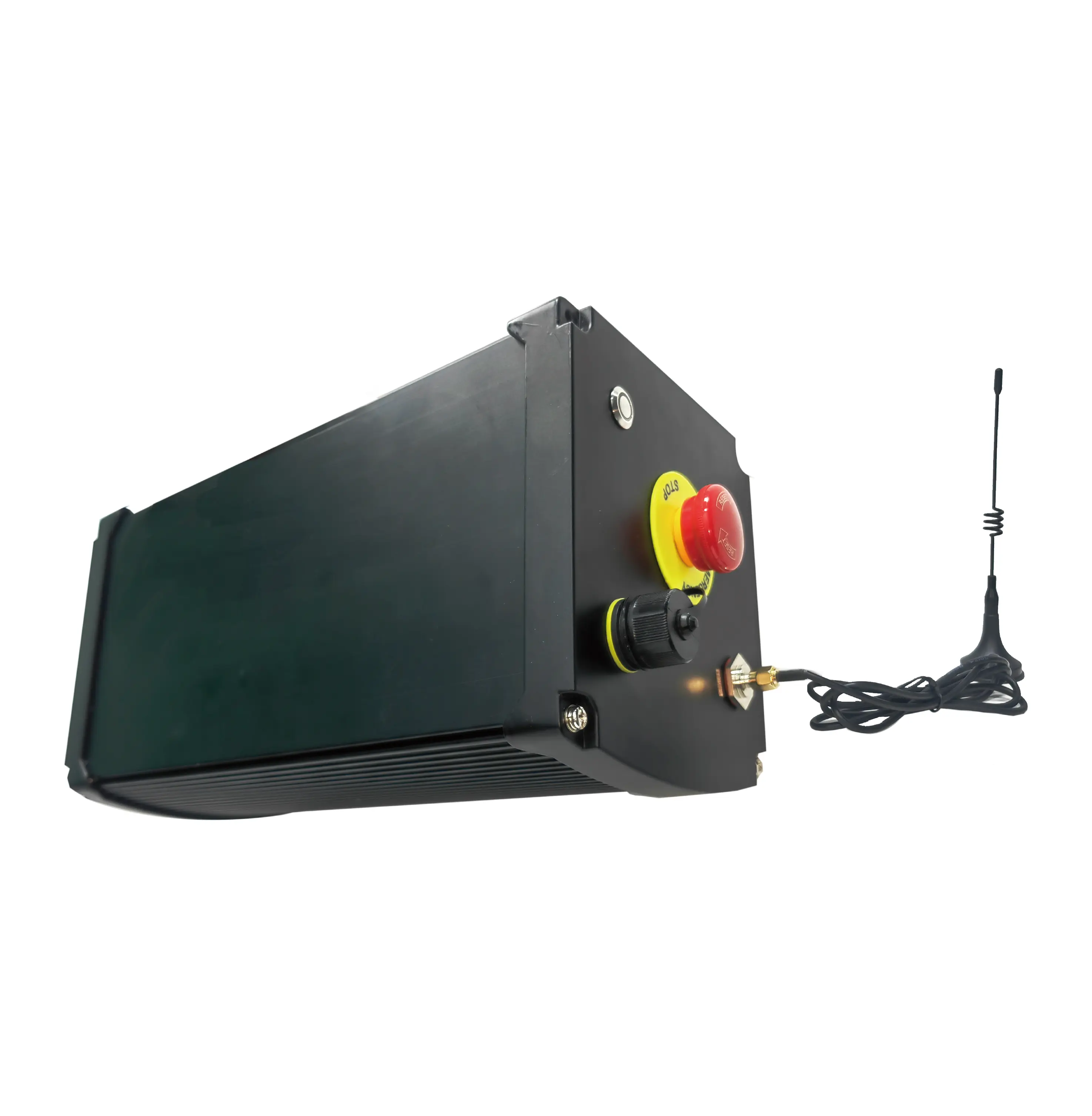
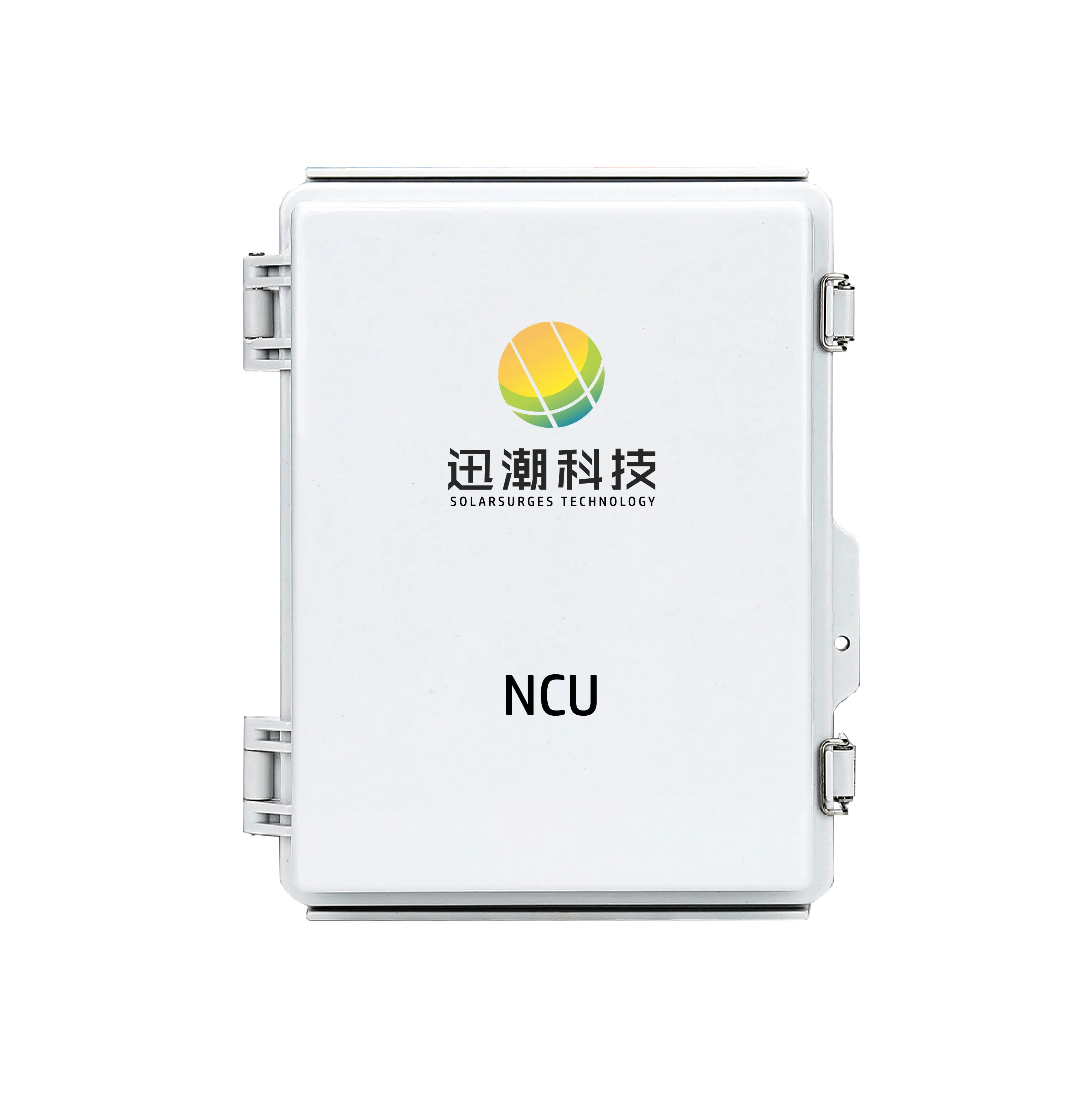
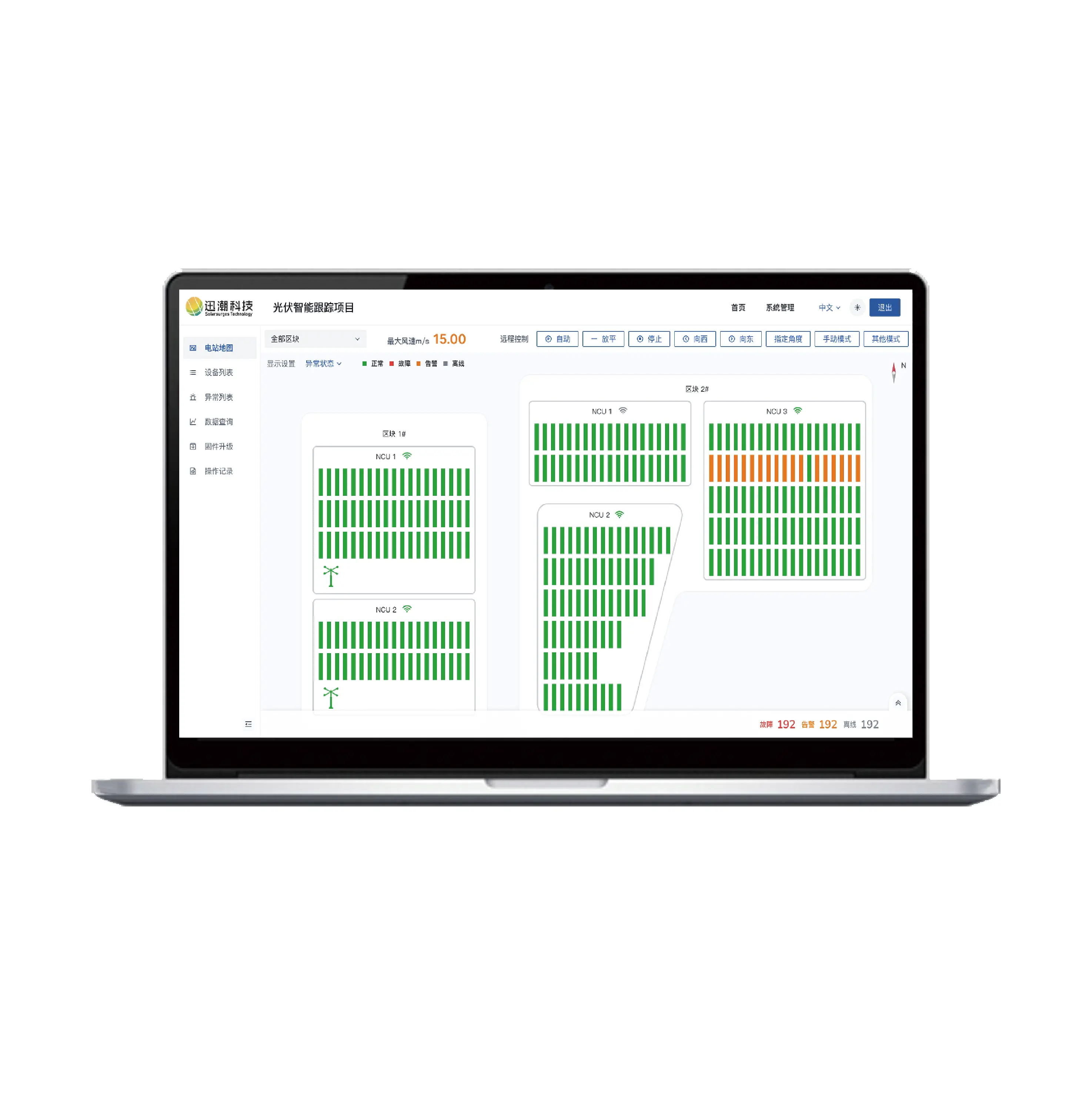
This is exactly where the PV tracker controller layer starts to matter most. A ground-mount plant in 2026 doesn't just need panels and piles. It needs a control architecture where every tracker's solar TCU is synchronized to plant-level operating curves, where the solar NCU runs wind, weather, and grid-price inputs through dispatch algorithms in real time, and where the solar SCADA platform backhauls to the EPC's O&M center as a first-class deliverable. The companies that can ship that stack — controller hardware, control firmware, plant-level software, and the field service to keep it tuned — are the ones that get the next round of European utility tenders.
The 2026 edition of Intersolar Europe still looks like a product fair on the surface. Underneath, it's become a supply-chain fair. What Chinese exhibitors showed was not just one panel or one inverter. It was a complete delivery capability running from the factory floor to the grid connection point — and increasingly, that capability extends all the way down to the solar tracker controller, the solar TCU on each row, and the solar NCU coordinating the plant at the solar SCADA layer above. Europe's biggest solar show is now a panoramic window onto the globalization capability of China's solar industry.
Related Solar Tracker Products