English
  中文
中文

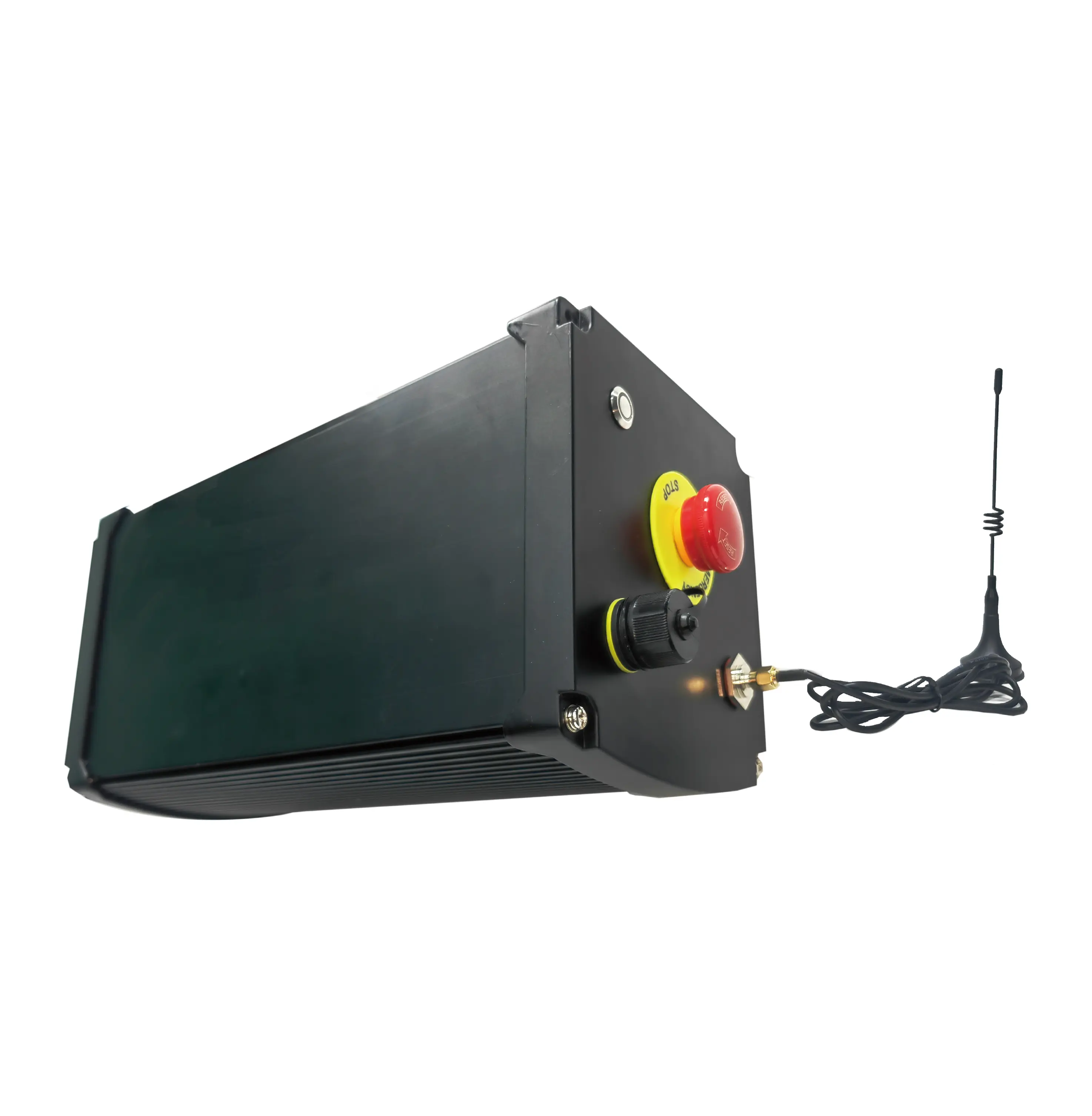
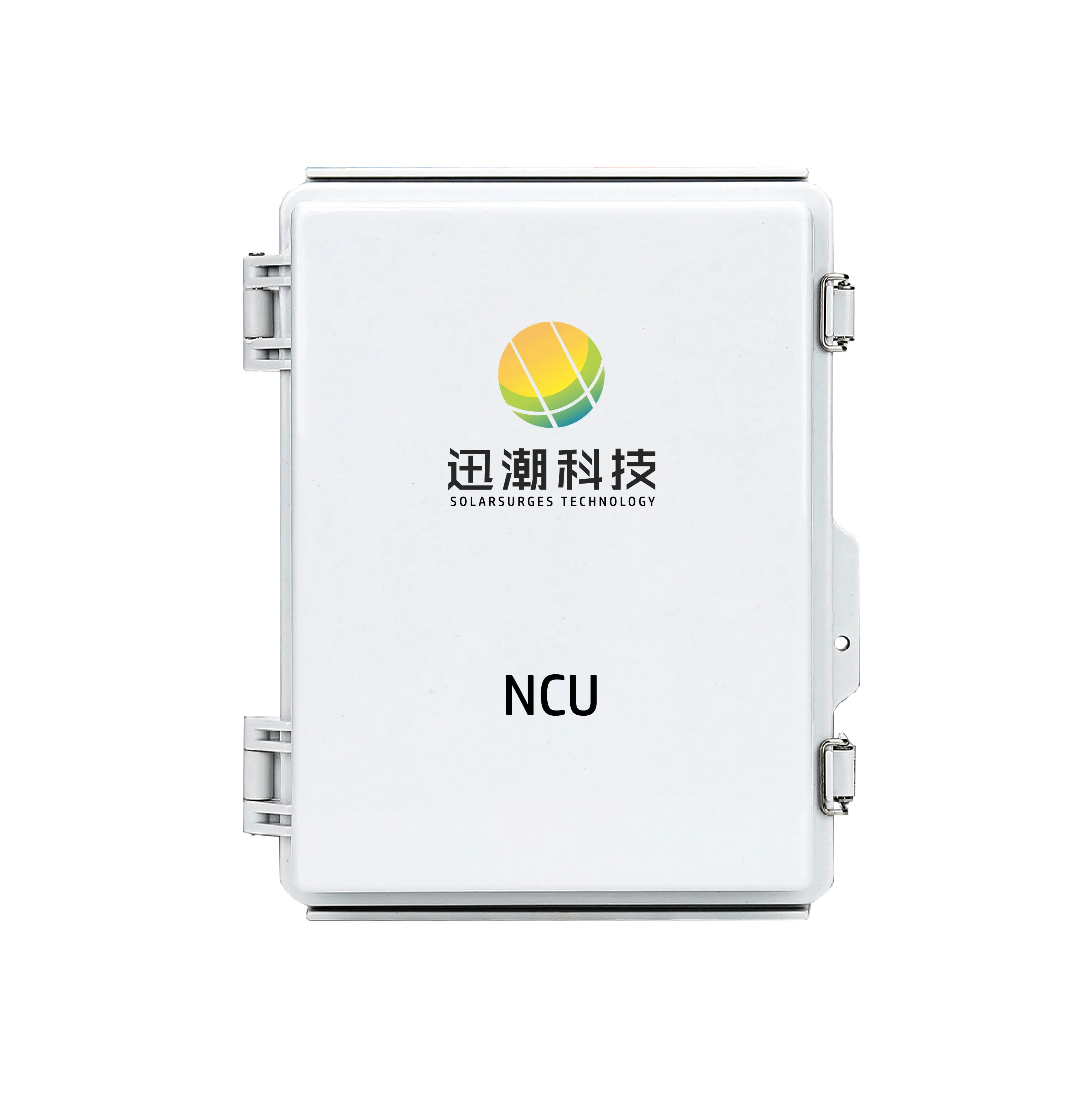
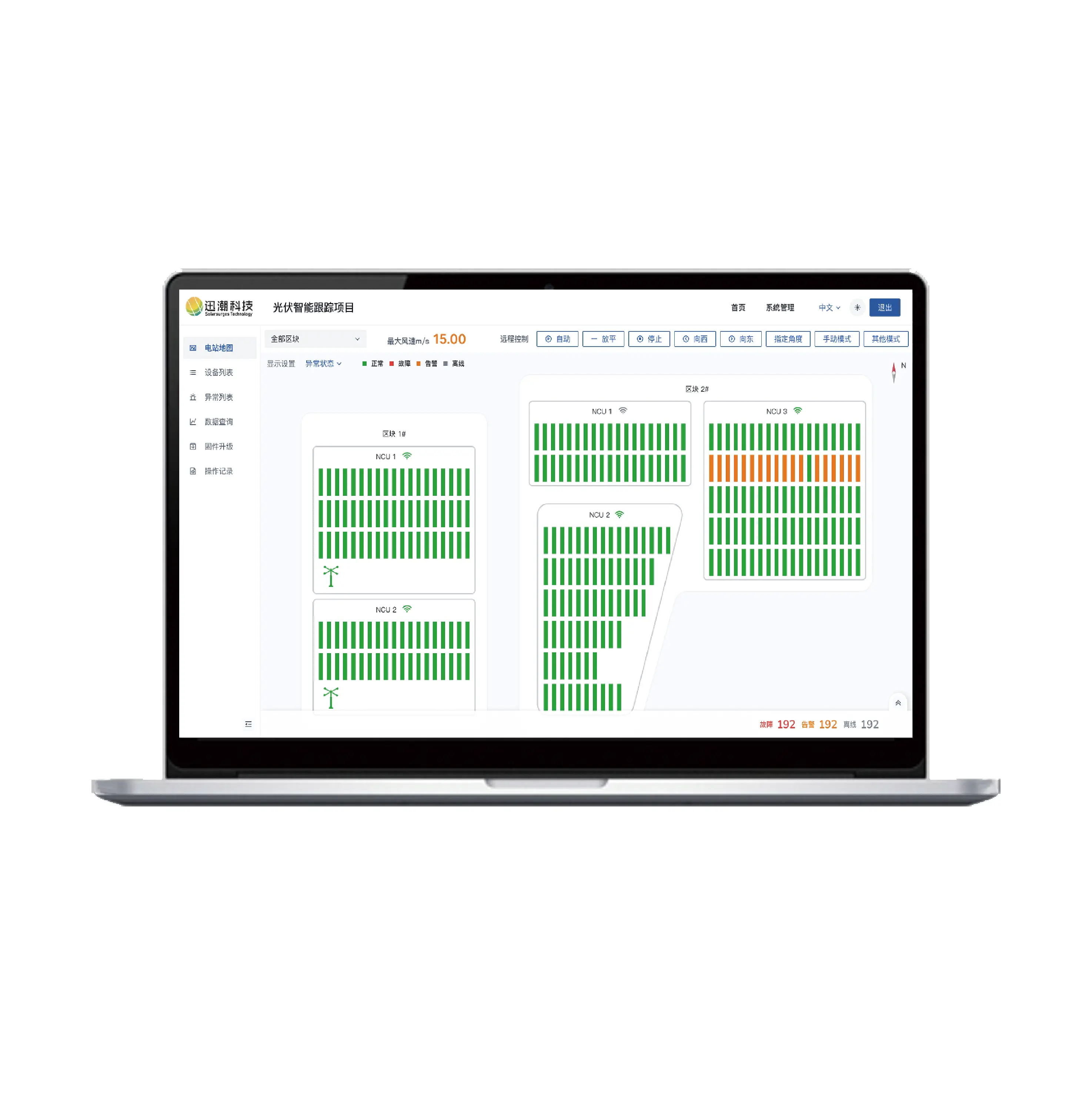

Table of Content
[Hide]
2026 Solar Market Drops to 612GW
Release date: July 9, 2026Source: Compiled from SolarPower Europe Global Solar Market Outlook 2026–2030 and public media coverage.On June 22, 2026, SolarPower Europe released its Global Solar Market Outlook 2026–2030 in Munich. The report confirms what most operators already felt: 2025 was a record year for global solar, with 664 GW of new capacity—up 12% year-on-year. But the headline forecast cuts deeper. 2026 global solar installations are projected to fall 8% to roughly 612 GW, the first annual contraction in more than twenty years.The pivot is structural, not cyclical. It marks the moment when global solar moves from "scale at all costs" into a "system-integration discipline." And behind that pivot sits a less visible but decisive technology stack—chiefly the solar tracker controller, the solar TCU, the solar NCU, and the wider PV tracker controller ecosystem—that is rapidly becoming the difference between a passive solar field and an active grid asset.This article walks through the SolarPower Europe outlook, what the 612 GW contraction really means, why China drives the headline while every other region still grows, and where the next round of competition will actually be won.
1. 2025 Recap: 664 GW Record, Global PV Crosses 3 TW
The 664 GW added in 2025 set yet another all-time high. Solar remained the dominant renewable expansion technology, accounting for 77% of all new renewable capacity installed globally during the year. Annual PV generation reached 2,778 TWh, meeting roughly 9% of global electricity demand.By the start of 2026, cumulative global PV capacity officially crossed the 3 TW threshold—tripling in just four years.
The regional picture, however, is far from uniform:
- China added 382 GW, continuing to dominate with 57% of all new global installations.
- India added 45.7 GW (+49% year-on-year), overtaking the United States to become the world's second-largest solar market.
- EU 27 added 67.2 GW (+1% YoY)—the bloc treated as a single market would rank second globally, behind only China.
- Asia-Pacific as a region added 487 GW, or 73% of the global total.
- Americas added 43.2 GW, down 13% year-on-year.
- Middle East & Africa added 23.7 GW, up 51%—the fastest-growing regional bloc.The top ten markets (China, India, the U.S., Germany, Brazil, Spain, Saudi Arabia, France, Italy, and Japan) together accounted for 82% of all 2025 installations.
2. 2026 Outlook: First Contraction in 20+ Years—Driven by China
Under its base case, SolarPower Europe forecasts 2026 global new solar installations at 612 GW, down 8% from 2025. Under a low-growth scenario the contraction deepens to 25%, taking installations down to roughly 501 GW; under an optimistic scenario the market still expands to 724 GW.China's policy reset is the single largest swing factor
The contraction is overwhelmingly a China story. The report projects China's 2026 installations to drop 24%, or roughly 93 GW, in a single year. The driver is the formal termination of fixed feed-in tariffs (FiT) for new PV projects on June 1, 2025, which triggered a pull-forward rush in H1 2025 to lock in the last guaranteed tariffs. From June 2025 onward, new PV projects in China must sell into the wholesale electricity market—where they now face structural price cannibalization during midday solar peaks.That single 93 GW drop in China more than offsets the combined 40 GW of growth projected across the rest of the world. As the report states plainly: "This decline exceeds all continued growth in other regions and highlights China's outsized influence on the global installation landscape."
The rest of the world keeps growing
Strip out China and 2026 is a growth year everywhere else. The same report forecasts:- Asia-Pacific ex-China: +18%
- Europe: +3%
- Americas: +11%
- Middle East & Africa: +48%In other words, the long-term fundamentals of global solar are intact. The 2026 contraction is essentially the release of China's "pull-forward overhang," not a turn in the underlying demand curve.
3. Industry Signal: From "Installation Race" to "System Integration"
Two of the most direct statements of the report came from its signatories.Walburga Hemetsberger, CEO of SolarPower Europe:
"The solar age is firmly established. 2025 set another installation record, and solar continues to outperform every other energy technology. But the slowing growth in 2025 and the expected decline in 2026 are important signals that reveal a new reality: scaling solar is no longer just about deploying more capacity—it's about how effectively we integrate it into the power system."
Sonia Dunlop, CEO of the Global Solar Council:
"This report demonstrates the critical role of solar-plus-storage in an increasingly turbulent global landscape. Even as some leading markets adjust their policies, the long-term, high-speed growth of solar remains unchanged."
Sonia Dunlop, CEO of the Global Solar Council:
"This report demonstrates the critical role of solar-plus-storage in an increasingly turbulent global landscape. Even as some leading markets adjust their policies, the long-term, high-speed growth of solar remains unchanged."
What "system integration" actually means on the ground
Behind those two quotes sits a concrete shift in technology and procurement:- PV plants are being constrained by grids, not by panels. Negative wholesale prices during solar peaks and rising curtailment are now structural, not episodic.
- Battery storage is becoming standard equipment. Hybrid PV+storage plants are moving from concept to default configuration.
- Tracker controllers are being asked to do far more than "follow the sun."That last point is where the solar tracker controller moves from a commodity mechatronic component into a strategic asset. A modern PV tracker controller is now expected to:
- Coordinate with battery state-of-charge and dynamic price signals
- Execute backtracking and stow commands under curtailment
- Expose real-time telemetry for ancillary services such as frequency response
- Update firmware over-the-air and integrate with plant-level SCADA
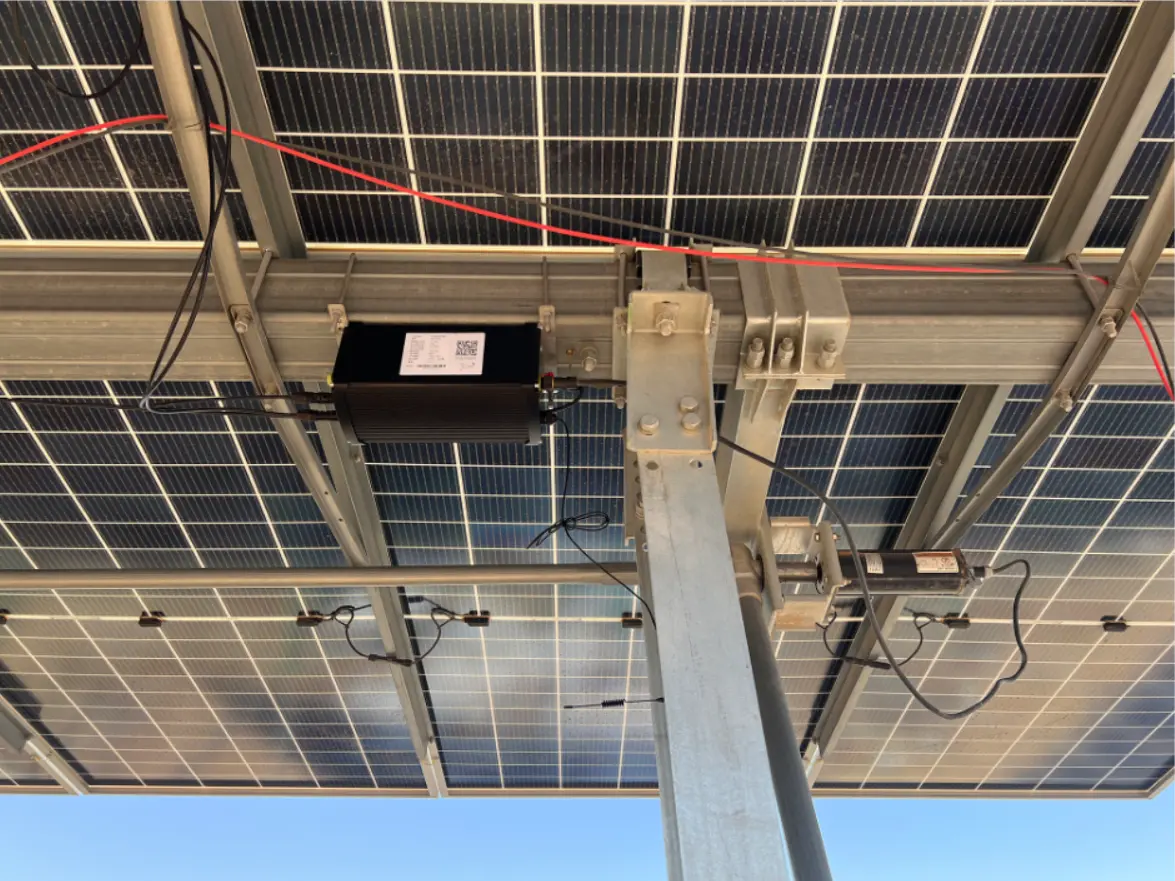
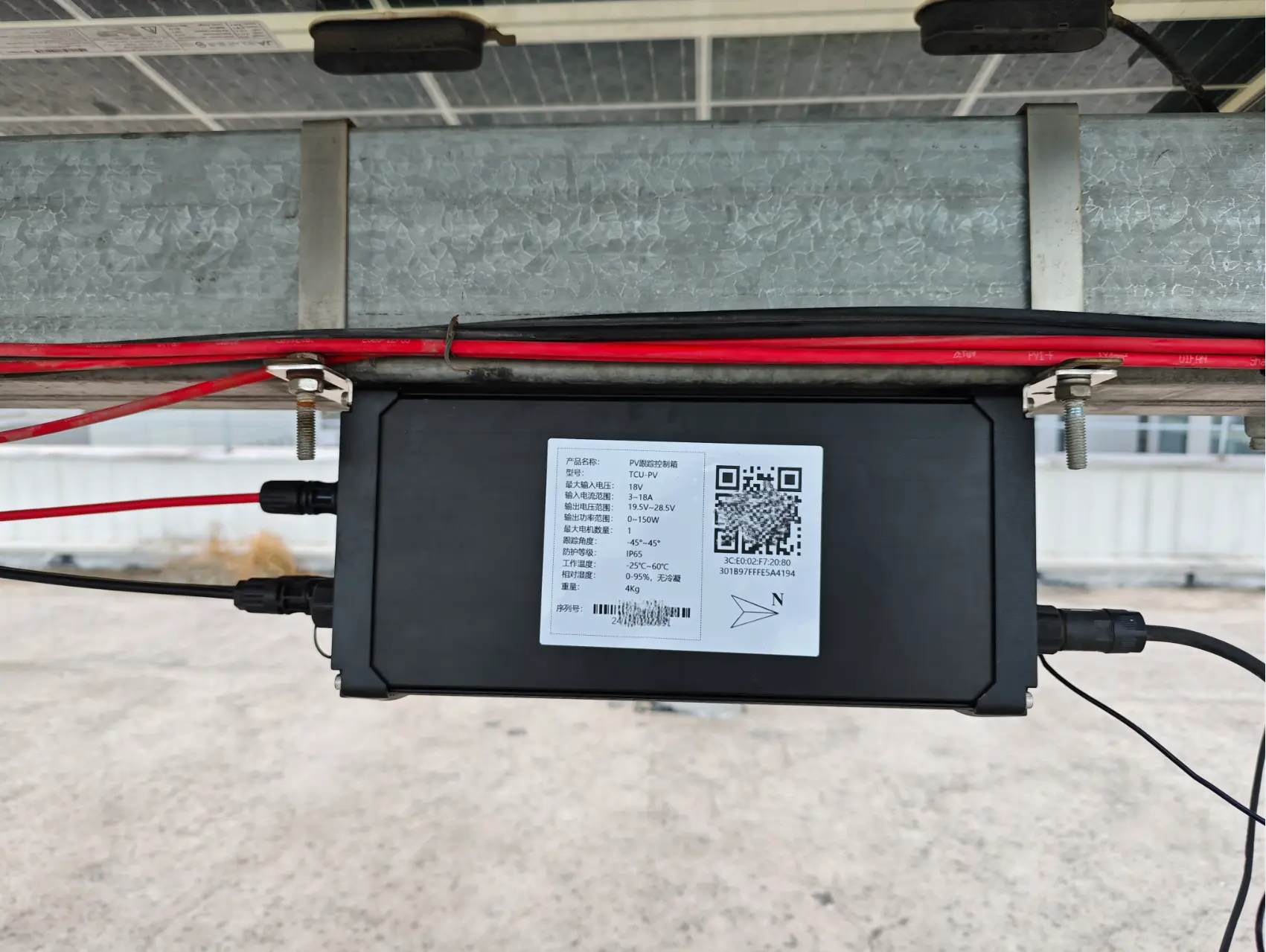
- Support remote diagnostics and predictive maintenance across thousands of nodesThese requirements elevate the solar tracker controller from a commodity mechatronic component to a strategic asset on par with inverter selection. EPCs that under-spec the solar tracker controller to save a few basis points now risk a plant that cannot earn revenue from ancillary services later.At the device level, each tracker is governed by a solar TCU (Tracker Control Unit) that executes those commands in real time, including storm-mode stow, snow-load shedding, and dynamic backtracking. At the plant level, a solar NCU (Network Control Unit) aggregates data from thousands of solar TCU nodes, runs power forecasting, orchestrates the storage dispatch schedule, and exposes the unified plant profile to the utility. This solar TCU + solar NCU control hierarchy—rather than panel wattage or tracker mechanical accuracy alone—is what increasingly defines whether a plant behaves as a dispatchable asset or a passive generator. For procurement teams, the message is clear: choosing the right solar TCU and solar NCU pair is now a strategic decision, not a checkbox.
4. Long-Term Outlook: 864 GW by 2030
Despite the 2026 air pocket, the medium-term trajectory stays strong. SolarPower Europe expects annual installations to resume growth from 2027 onward, and every gigawatt added from 2027 through 2030 will be evaluated as much by its grid-friendliness as by its capacity factor. That is why the solar tracker controller, the solar TCU, and the solar NCU sit at the center of the next round of plant design: they are the components that turn a recovery into an integrated, dispatchable asset class.
5. Implications for China's PV Industry
For China's PV sector, a 612 GW global market in 2026 carries both a clear challenge and a clear opportunity.The challenge. The 24% drop in domestic demand intensifies manufacturing overcapacity. Modules will flow toward export markets, accelerating global price competition. With export tax rebates already eliminated in April 2025, Chinese module makers now face shrinking internal demand and intensifying external price pressure simultaneously—the classic "squeeze from both sides."The opportunity. Every major region outside China still grows in 2026. MEA is projected at +48%, India continues to post double-digit growth, and European, Latin American, and Middle Eastern hybrid PV+storage pipelines are visibly accelerating. The growth is real, but it is increasingly hybrid—combining PV, storage, and grid services at the same point of interconnection. Winning these markets will hinge on full-stack system-integration capability, anchored by a reliable solar tracker controller, a responsive solar TCU, and a capable solar NCU that can deliver grid-friendly behavior out of the box.Where the next round of competition will be decided. The industry's center of gravity is moving decisively from "who can install the most megawatts" to "who can turn solar into a stable, dispatchable, scheduleable source of electricity." The companies that can solve curtailment, deliver ancillary services, and run intelligent fleets of solar tracker controllers—each managed by a capable solar TCU and orchestrated by a solar NCU—will be the ones who earn the next decade's market share.In SolarPower Europe's own closing words: "Despite continuing short-term uncertainty, the long-term outlook for solar remains strong. The technology will continue to expand at unprecedented speed, consolidating its central role in global decarbonization efforts—and its new role as a critical technology for nations pursuing greater energy security."
Note: This article is translated and SEO-optimized for the Solarsurges brand. Data accurate as of July 9, 2026. For reference only; not investment advice.
References
Related Solar Tracker Products